* * *
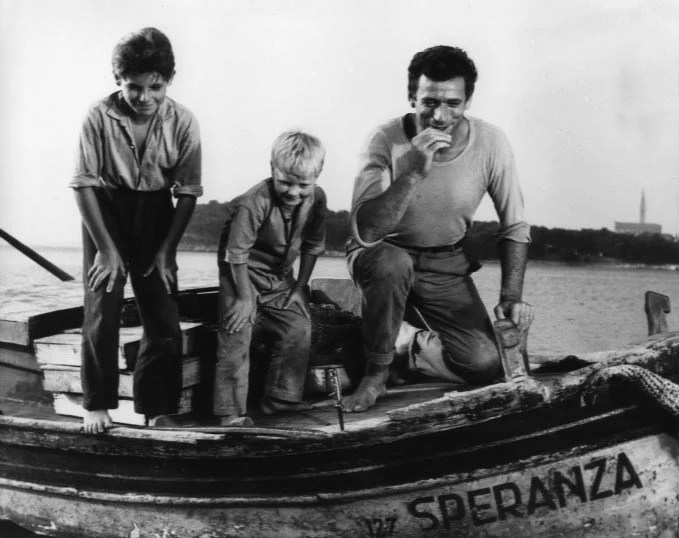
Pontecorvo’s career hinges on the very influential The Battle of Algiers which he made in the 1960s. I often thought his career was far more extensive, but he only made a handful of films. His earliest film, The Wide Blue Road, is a provocative blend of neorealism and political melodrama. In essence, this one can clearly be bracketed as a social realist work, focusing on the lives of fisherman living on the coast of Italy who seem trapped in a cycle of poverty. To make ends meet, Squarcio (Yves Montand) is forced to fish illegally, and which leads to his isolation from the rest of the fishermen. The prevailing fishing authorities who increasingly come to take a zero-tolerance approach to Squarcio’s flouting of the rules also emerges as a critique of the erosion of traditional livelihoods sustained by what is around them; the loss of an organic way of living seems unsustainable in the face of great change, and modernity. Pontecorvo sympathises with such a loss, and in doing so, the neutering of the patriarch can be read as an extended commentary on the destruction of the family and displacement of generational, historical traditions that cannot be maintained.
 Movie Mahal