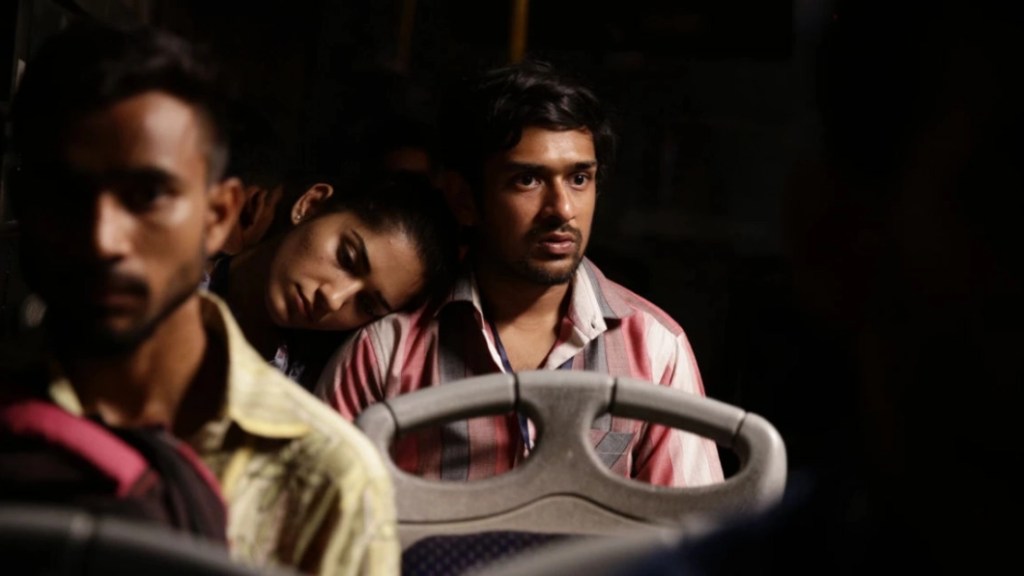
There is a lot of sex in Agra; in the toilet (masturbatory self-relief), on the phone (sexting), on the bed. It is raw, unfiltered sex, rarely depicted in Indian cinema with such indescribable candour. Guru, a young call centre employee lives in what can only be described as a kind of sexual desolation bordering on masochism. Mohit Agarwal is superb in the lead role; as are all the actors. Consumed by an imaginary girlfriend whom he seems to conjure in particularly distressing moments of domestic conflict and family dysfunction, Guru has nowhere to go – he is hemmed on all sides in an economic prison, in a house that he hopes to inherit one day.
Agra recalls Titli in its superlative grasp of the city and its unseemly urban spaces, enunciating a familiar realist milieu in which urban development and expressly housing is linked to class aspirations and in this case a broken masculinity. Is it that people just don’t have enough physical space to find solace in their life, to get away from the suffocating traditions of family life? Behl seems to find the metonym of the dysfunctional Indian family endlessly fascinating, and this time it is a family that wants to devour itself completely, and which is framed in disturbing acts of self-harm.
Where this impressive work draws its emotional core from are two brilliantly constructed sequences; the second encounter between Guru and Priti (Priyanka Bose) in the internet café and the extended negotiation with the construction company towards the end of the film. Both sequences showcase Behl’s very striking feel for nuance, rhythm and gestures. It was only much later did I realise Rahul Roy (of Aashiqui fame) plays the father, an expressively nostalgic link to perhaps Behl’s own adolescence of growing up in the 90s.
 Movie Mahal