* * *
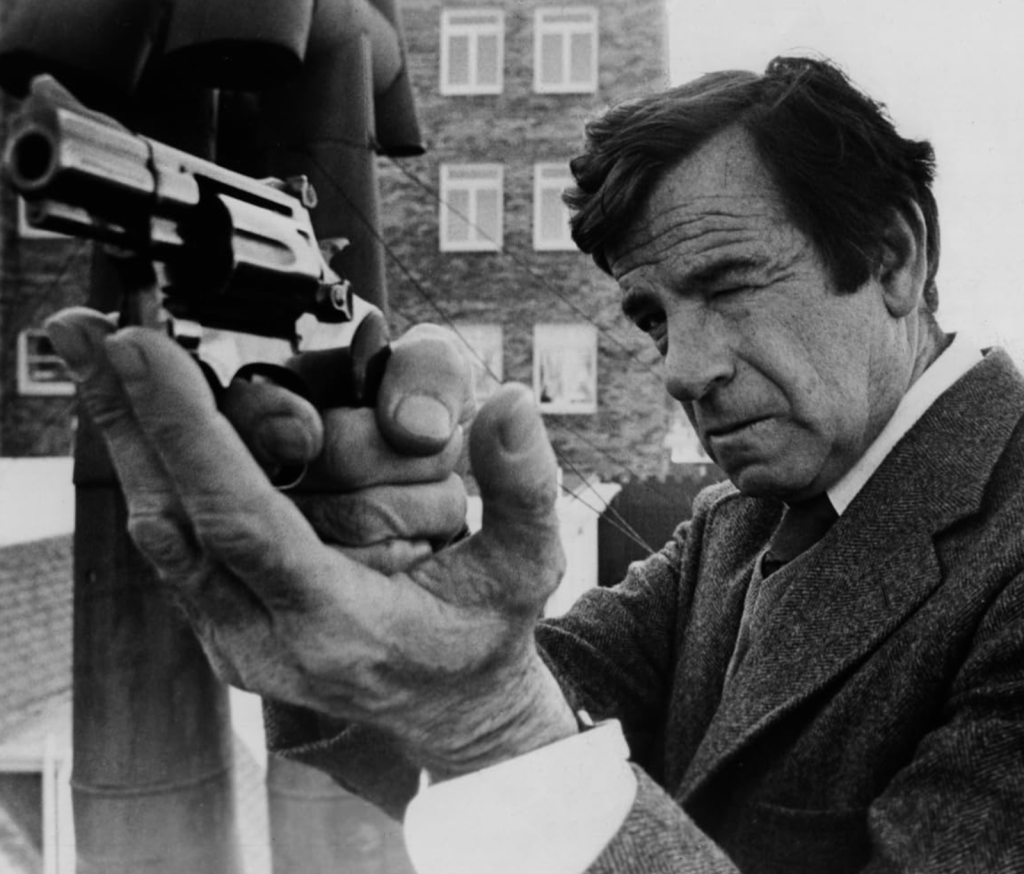
When a gunman opens fire on a late-night bus in San Francisco, establishing the idea of a killer on the loose in a city one would naturally assume this is going to be the first of many brutal public executions. I blame Siegel’s Dirty Harry (1971), which was released a few years, for conditioning the consciousness of film audiences into expecting a serial killer chomping his way through the urban scenery. Stuart Rosenberg doesn’t take the bait, rejecting what would have been the delirium of the obsessive police detective and the violence of the killer. Instead, Rosenberg seems far more interested in the unexciting inner lives of the police detectives. The narrative carves out a fairly complex character study of Jake Martin (Walter Matthau), a middle-aged detective, jaded yet consumed by the grim realities of police work while completely disinterested in a home life made up of a family in which his wife behaves like an automaton and a son who visits porno theatres.
A lean Eastwood traipsing around the streets of Frisco is of course an elegant sight to behold but Rosenberg turns this notion on its head, casting the droopy Matthau in the lead and confounding expectations. What Matthau brings is a comedic flair that cuts through the urban gutter, and which is doubly amplified in the casting of Bruce Dern as his makeshift partner; a double act that stumbles their way through the pursuit of the gunman. When the identity of the gunman is unveiled, Rosenberg avoids the spectacular, suggesting the work of a detective is convoluted, non-linear, boring and completely topsy turvy, the antithesis of Eastwood’s politicized specimen of a modern-day cop. If McQueen’s Frank Bullitt (1968) brought an urban non-conformist chic to the police detective, then Matthau’s Jake Martin appears to be almost out of step with what was a changing American society, a sort of relic but likable nonetheless.


 Movie Mahal
Leave a reply to Roy Stafford Cancel reply