Documentary
-
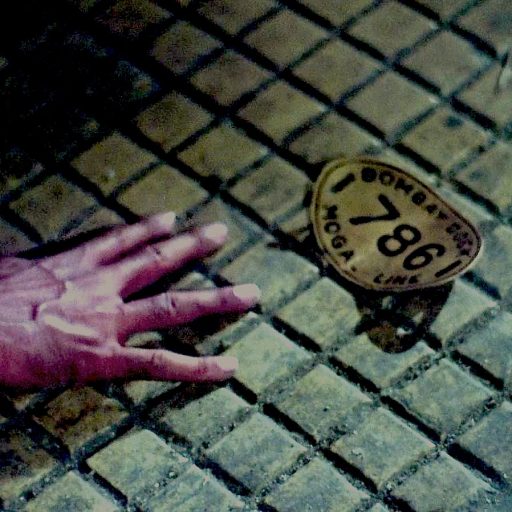
AUTOHEAD (Dir. Rohit Mittal, 2016, India)
Rohit Mittal’s macabre slice of docufiction plunges the depths of Mumbai’s underclass. The concept of Autohead involves a documentary crew observing a rickshaw driver, Narayan (Deepak Sampat), who gradually reveals a murderous defect in his unpleasantly compelling disposition. Mittal’s docufiction recalls most readily Belvaux and Bonzel’s magnificently twisted Man Bites Dog (1992). Analogously, the crew Continue reading
-
THE BATTLE FOR BANARAS (Dir. Kamal Swaroop, 2015, India) – The Crowd
There is a spectacular political trice at the end of Swaroop’s participatory documentary. At night, on the banks of the river Ganges, which is teeming with euphoric revellers and a swathe of India’s police, Modi emerges victorious, returning to Banaras, where he had stood for election as a BJP candidate. As he makes his way Continue reading
-
SONG OF LAHORE (Dir. Sharmeen Obaid-Chinoy, Andy Schocken, Pakistan/US, 2015)
The incandescent documentary Song of Lahore narrates a hopeful story about culture and the arts in Pakistan which has witnessed since the 1970s a steady decline and erosion of both. Directors Sharmeen Obaid-Chinoy and Andy Schocken frame the recent emergence of Sachal Studios, set up to try and bring together some of Pakistan and Lahore’s best Continue reading
-
PLACEBO (Dir. Abhay Kumar, 2014, India)
Abhay Kumar’s feature length directorial debut Placebo, a fiercely inventive documentary, had its world premiere last month at the IDFA in Amsterdam. What makes the project especially significant from a funding point of view is the director raised much of the financing through ‘crowd funding’. A trailer released in February 2013 helped to attract attention Continue reading
-
COURT (Dir. Chaitanya Tamhane, 2014, India)
It’s an impossibility to keep track of the numerous directorial debuts coming our way from India these days. Chaitanya Tamhane joins such ranks with his skilfully scripted docu-fiction courtroom drama unequivocally studying the Indian legal system and its many contradictions. Rather than look at many different cases, Tamhane fixes his observational gaze resolutely on Narayan Continue reading
 Movie Mahal